
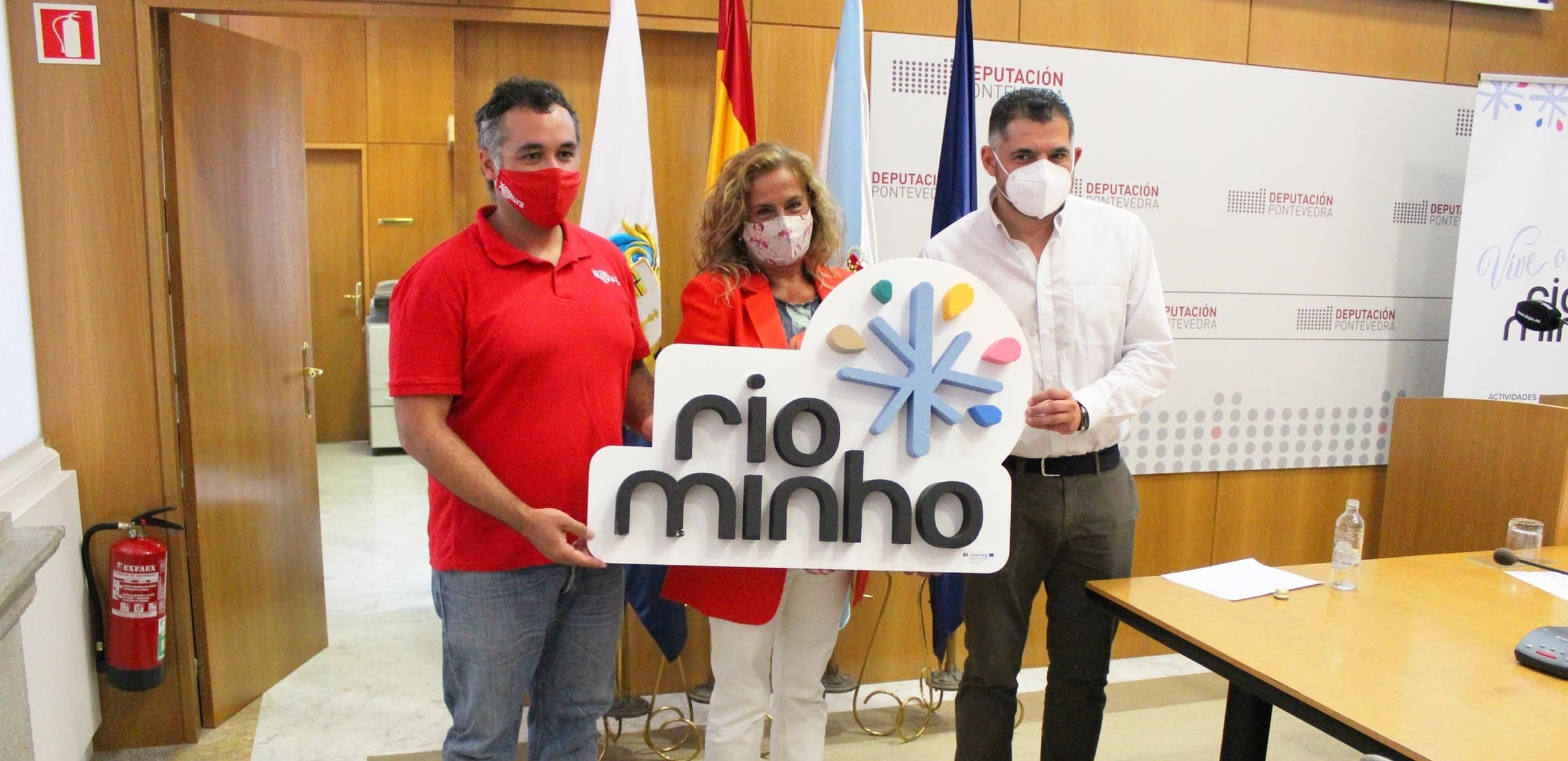
Under the name ‘Vive o Rio Minho’, the Deputación de Pontevedra will organize seven ecotourism activities along the transboundary Minho River – in the Galician and Portuguese municipalities bordering the river – between September 12 and October 4. The goal, according to Uxío Benítez, the Deputy for Transboundary Cooperation and Director of the AECT Rio Minho, is to offer a tourism alternative that meets “what society demands today following the COVID-19 crisis, providing the opportunity to explore the territory in a calm, safe way, while connecting with nature and everything the Minho River has to offer.”
The activities of ‘Vive o Rio Minho’ are part of the Visit Rio Minho project, co-financed with ERDF funds through the Interreg V-A POCTEP 2014-2020 program. The activities will revolve around the Minho River and will be conducted chronologically along its course, from the upper reaches to its mouth. They are free of charge and aimed at a broad and diverse audience, encompassing not only the resources of the region but also local businesses that operate and provide activities in the area.
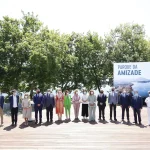
The President of the Deputación and the Deputy for Transboundary Cooperation presented a program of nature routes and events to be held between September 12 and October 4 in the Galician and Portuguese municipalities along the Minho River.
“We want to invite the residents of the province to participate. The goal is to raise awareness of a part of the province that, due to having been a border for hundreds of years, remains little known. We want to showcase the territory in a transboundary and unique way. This is a different and very attractive product,” emphasized Benítez.
According to the deputy, the Deputación decided to invest in the socioeconomic development of the Minho River territory through two avenues. First, by creating an institutional framework, the AECT Rio Minho, with partners from the Alto Minho Intermunicipal Community in Portugal, which started working a few years ago; and second, by developing a strategy in collaboration with universities, the Minho 2030 Strategy, which set objectives and actions to develop the territory.
“In both the strategy and the statutes of the AECT Rio Minho, one of the most important goals was to develop the Minho territory as a single tourism destination and to wrap it in a unique tourism brand to present it to the world as the image of a transboundary region offering two countries in a single destination,” Benítez added.
Activities will include hiking, cycling routes, urban and historical tours, visits to wineries, museums, petroglyphs, rafting, kayaking, gastronomy, birdwatching, and astronomical observation, among others.
The President of the Deputación, Carmela Silva, highlighted the “spectacular” and “attractive” proposal encompassed by Vive o Rio Minho, “which combines all kinds of activities with learning about and enjoying the Minho River territory.” She also noted that since its creation five years ago, the AECT Rio Minho has become a “reference,” not only in the province but also in the promotion and protection of a unique common territory due to its transboundary character. “If there is a significant example of how politics can transform the space we govern, it is the creation of this AECT,” she said.
In this regard, she stated that its implementation “was a smart investment that has delivered great results and serves as an example for other municipalities that have much in common.” Carmela Silva also emphasized that the work carried out by the AECT, the result of the combined efforts of municipalities on both sides of the river, is “revolutionary.” “Revolution means evolving again, and these mayors are evolving together – she said –: at this moment of Covid, either we combine our efforts, work, and have plans prepared across different spaces and territories with a common project, or it will be very difficult to move forward.”
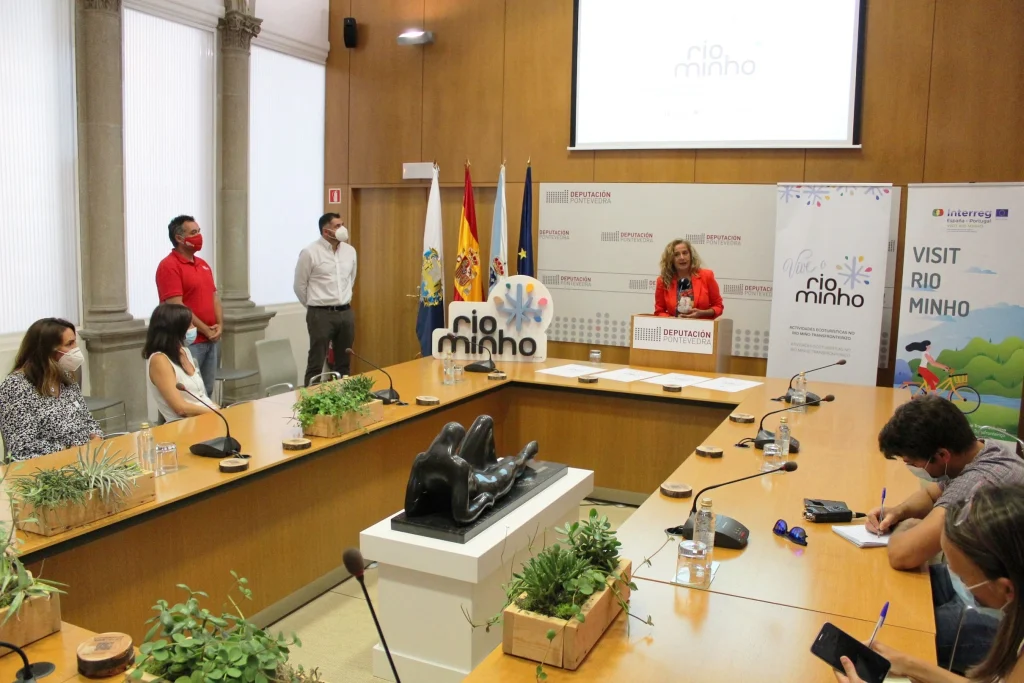
‘Vive o Rio Minho’ Activities
According to Raúl Fernández, manager of Xeitura, the company organizing the initiative, the proposals for exploring the Minho are divided into consecutive weekend sessions from September 12 to October 4.
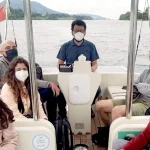
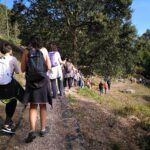
- First weekend: two activities – a hiking route along the Minho and Deva rivers to the Alto da Moura and a visit to Melgaço; and, simultaneously, a Minho River descent with a guided visit to a winery in As Neves and to the Coutada petroglyphs.
- Weekend of September 19–20: third and fourth routes. The third route is a circular tour around Salvaterra, including a visit to a vineyard and the Wine Museum. The following day, the plan is a tour of the municipality of Monção, known as “A Cova da Moura,” including a visit to the Brejoeira Palace and Monção town.
- September 26: cycling route along the Minho eco-trail between Valença and Vila Nova de Cerveira, with a guided visit of Valença and Tui.
- September 27: hiking route between the Tamuxe river mouth and Goián port, visit to the fortress, and a kayaking segment on the river.
- October 3–4: full weekend combining hiking routes, birdwatching, guided visits, and a dramatized visit to the Santa Tegra Castro.
All activities are free of charge and open to the general public.
Registrations for the first weekend events can be made from Friday until the following Thursday at 11 p.m. on the Deputación website (depo.gal), with spots filled on a first-come, first-served basis.
Registrations for subsequent activities will be open from Monday at 9 a.m. until Thursday at 11 p.m., if spots are not already filled (between 45 and 50 participants per event).